Stingray 3D Shadow Box Papercut: A Designer's Review
When I first opened the file for Stingray 3D Shadow Box Papercut, my initial reaction was one of genuine curiosity. As someone who spends hours evaluating digital assets for both personal studio work and client commissions, I am always looking for designs that offer more than just a simple silhouette. This piece is categorized as a Other type within the 3D SVG collection, but it promises something distinct: a layered aesthetic that mimics the depth of paper cutting rather than flat embroidery.
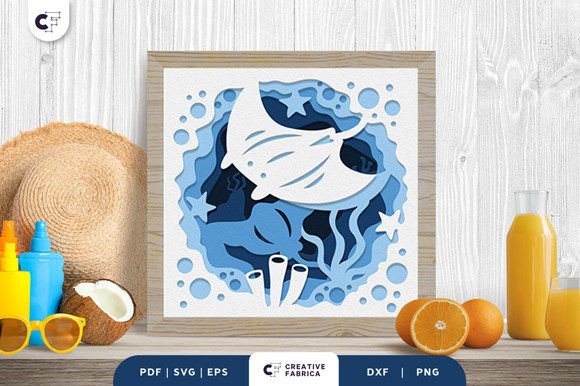
The concept relies on five distinct layers of ocean-life silhouettes arranged to create a shadow box effect. In theory, this is a fantastic approach for adding visual interest without overwhelming the garment or item being decorated. The mood it creates is airy, nautical, and slightly whimsical, making it an excellent candidate for summer collections, beach-themed boutiques, or even nursery decor where a softer, less aggressive marine theme is desired.
From Digital File to Finished Product
Let me walk you through how I envision this design performing in a real-world scenario. Imagine you are an Etsy seller preparing a custom order for a local boutique. You need a unique embroidered patch or a centerpiece for a tote bag that stands out from the generic anchor or fish designs flooding the market. That is where Stingray 3D Shadow Box Papercut shines.
The multi-layered nature of this design suggests that it would look incredible when executed with varying thread colors to enhance the "shadow" effect. If you were to stitch this onto a canvas tote bag using a light cream base fabric, you could use darker blues and teals for the deeper layers, creating a sense of depth that feels almost tangible. It transforms a standard tote bag design into a piece of wearable art. Similarly, for a baby sweatshirt, the gentle curves of the stingray and accompanying sea life avoid the sharp edges that sometimes irritate sensitive skin, while the layered look adds a premium feel that parents love.
I also see potential here for holiday gifts. During the summer season, or perhaps for a nautical-themed wedding shower, this design offers a sophisticated alternative to traditional monograms. When used as a personalized gift, the intricate layering gives the impression of high effort and attention to detail, which significantly boosts the perceived value of the finished product.
Where to Exercise Caution
However, not every project is a fit, and as an experienced designer, I believe it is crucial to be realistic about the limitations of this file. While the 3D SVG format looks stunning on a screen, translating those five distinct layers into actual stitching requires careful planning.
If you are working with small hoop sizes, such as those required for hats or cuffs, you must evaluate the total dimensions of the stacked layers. There is a risk that the details might become too crowded if the design is scaled down too much. Tiny corners can get lost in the needle movement, leading to a muddled appearance rather than crisp definition. For these smaller applications, testing on scrap fabric is non-negotiable.
Fabric choice is another critical factor. Textured fabrics like heavy denim or bouclé can obscure the delicate lines of the shadow box layers. Furthermore, stretchy fabrics like jersey require a stabilizer system that is robust enough to prevent puckering, especially since the density of the fill stitches needed to create the solid shapes might pull on the material. Dark fabrics present their own challenge; if the background color clashes with the thread choices, the "shadow" effect might disappear, leaving only a flat shape against a dark void.
I would also advise against using this design on items that require frequent, harsh washing, such as industrial kitchen aprons or children's play clothes, unless you are confident in your stabilizer selection. The fine details of the papercut style can fray over time if the stitch density is not optimized correctly.
Design Judgment and Visual Appeal
What makes Stingray 3D Shadow Box Papercut a strong asset for a craft business is its ability to elevate brand consistency. When customers see a cohesive, well-executed layered design on a product, they immediately associate it with professionalism. It signals that the maker cares about aesthetics beyond just slapping a logo on a shirt.
In terms of embroidery project execution, the design relies heavily on the interplay between different stitch types. To achieve the best results, you will likely need a combination of satin stitch for the clean outlines of the silhouettes and fill stitch for the body of the layers. Some areas might benefit from a running stitch to suggest texture or separation between the paper-like layers, though this depends entirely on how the machine reads the file.
For commercial embroidery, the versatility is key. You could adapt this design for pillow covers, where the larger surface area allows the layers to breathe. It works beautifully as a focal point on a linen throw blanket, adding a touch of coastal elegance to a living room. Even as a standalone embroidered patch, the layered look provides a dimensionality that flat patches simply cannot match, making it a higher-value item for wholesale buyers.
Practical Notes for the Maker
Before you hit the "Start" button on your machine, there are several technical checks you should perform. First, always review the stitch density. Since this design aims for a specific visual effect, too much density can make the fabric stiff and hard to wear, while too little can result in visible gaps between threads.
Check your thread colors carefully. The magic of this design lies in contrast. I recommend creating a printable mockup or a digital preview in black and white to ensure the layers are distinct before committing to expensive specialty threads. Test the design on both light and dark fabric backgrounds to see how the shadows hold up. If you are unsure about the hoop size required, measure the bounding box of the entire composition, including all five layers, to ensure it fits your intended product.
Don't forget to inspect the small details closely. Sometimes, when converting vector files to embroidery formats, tiny paths can get lost or merged. Ensure that the inner cutouts remain open and do not accidentally become filled areas. Also, verify whether the file includes instructions for the specific applique design technique you plan to use, or if it is purely a stitched representation.
Finally, confirm the licensing terms. Whether you are selling small shop products or offering digital embroidery files to other makers, understanding your rights to design assets is vital. Make sure you have permission to use this design for commercial purposes and check if there are any restrictions on the number of units you can produce.
In conclusion, Stingray 3D Shadow Box Papercut is a thoughtful addition to any designer's library. It offers a modern twist on traditional nautical themes and provides ample opportunity for creativity in thread selection and fabric pairing. With proper testing and attention to detail, it can serve as a standout piece for custom apparel, holiday embroidery, or baby embroidery, helping you deliver a finished product that truly impresses.